updates

Slid bar

The Occupation We Choose to Ignore’

Do you know who I am? I am a Sahrawi. The land to which I refer is what is known today as the non-self-governing territory ofWestern Sahara. My country was colonized by the Spanish and the French between 1884 and 1975, divided in two and occupied by Moroccan and Mauritanian forces thereafter, and has been ruled exclusively by the Kingdom of Morocco from 1979 until the present.

The Western Sahara: forgotten first source of the Arab Spring

this is one part of the Arab Spring that western governments don't want to talk about. And their silence, and the UN's complicity in it, is why that repression continues, and a terrible injustice is perpetuated.

ISS - News - The Western Sahara and North African People’s Power

Respect the right of individuals to peacefully express their opinions regarding the status and future of the Western Sahara and to document violations of human rights

King of Morocco to be biggest benefactor of EU trade agreement - Telegraph

it has emerged that the single biggest beneficiary of the deal will be the King of Morocco, who is head of one of the three largest agricultural producers in the north African country and lays claim to 12,000 hectares of the nation's most fertile farmland.

North African Dispatches Africa’s Forgotten Colony

Oblivion it seems is the current reality for the arid North African territory of Western Sahara; often referred to as Africa’s ‘Last Colony’. In my opinion, it would be more accurate to describe it as ‘Africa’s Forgotten Colony’.

1 2 3 4 5

Jun 17, 2013

The Last Colony: Beyond Dominant Narratives on the Western Sahara Roundtable


[Image from the Tindouf refugee camp in Algeria. Image from Wikimedia Commons.][Image from the Tindouf refugee camp in Algeria. Image from Wikimedia Commons.]
[This is one of seven pieces in Jadaliyya's electronic roundtable on the Western Sahara. Moderated by Samia Errazzouki and Allison L. McManus, it features contributions from John P. Entelis, Stephen Zunes, Aboubakr Jamaï, Ali Anouzla, Allison L. McManus, Samia Errazzouki, and Andrew McConnell.]
Western Sahara is a sparsely-populated territory about the size of Italy, located on the Atlantic coast in northwestern Africa, just south of Morocco. Traditionally inhabited by nomadic Arab tribes, collectively known as Sahrawis and famous for their long history of resistance to outside domination, the territory was occupied by Spain from the late 1800s through the mid-1970s. With Spain holding onto the territory well over a decade after most African countries had achieved their freedom from European colonialism, the nationalist Polisario Front launched an armed independence struggle against Spain in 1973. This—along with pressure from the United Nations—eventually forced Madrid to promise the people of what was then still known as the Spanish Sahara a referendum on the fate of the territory by the end of 1975. The International Court of Justice (ICJ) heard irredentist claims by Morocco and Mauritania and ruled in October of 1975 that—despite pledges of fealty to the Moroccan sultan back in the nineteenth century by some tribal leaders bordering the territory, and close ethnic ties between some Sahrawi and Mauritanian tribes—the right of self-determination was paramount. A special visiting mission from the United Nations engaged in an investigation of the situation in the territory that same year and reported that the vast majority of Sahrawis supported independence under the leadership of the Polisario, not integration with Morocco or Mauritania.
During this same period, Morocco was threatening war with Spain over the territory and assembled over  three hundred thousand Moroccans to march into Western Sahara to claim it as theirs regardless of the wishes of the indigenous population whose dialect, dress, and culture was very different than that of the Moroccan Arabs to their north. Though the Spaniards had a much stronger military during that time, they were occupied with the terminal illness of their longtime dictator, General Francisco Franco. At the same time, Spain was facing increasing pressure from the United States, which wanted to back its Moroccan ally, King Hassan II, and did not want to see the leftist Polisario come to power. As a result, Spain reneged on its promise of self-determination and instead agreed in November 1975 to allow for Moroccan administration of the northern two thirds of the Western Sahara and for Mauritanian administration of the southern third.
As Moroccan forces moved into Western Sahara, nearly half of the population fled into neighboring Algeria, where they and their descendants remain in refugee camps to this day. Morocco and Mauritania rejected a series of unanimous United Nations Security Council resolutions calling for the withdrawal of foreign forces and recognition of the Sahrawis' right of self-determination. The United States and France, meanwhile, despite voting in favor of these resolutions, blocked the United Nations from enforcing them. At the same time, the Polisario—which had been driven from the more heavily populated northern and western parts of the country—declared independence as the Sahrawi Arab Democratic Republic (SADR).
Thanks in part to the Algerians providing significant amounts of military equipment and economic support, Polisario guerrillas fought well against both occupying armies and defeated Mauritania by 1979, making them agree to turn their third of Western Sahara over to the Polisario. However, the Moroccans then annexed the remaining southern part of the country as well.
The Polisario then focused their armed struggle against Morocco and by 1982 had liberated nearly eighty-five percent of their country. Over the next four years, however, the tide of the war turned in Morocco's favor thanks to the United States and France dramatically increasing their support for the Moroccan war effort, with US forces providing important training for the Moroccan army in counter-insurgency tactics. In addition, the Americans and French helped Morocco construct a 1200-kilometer "wall," primarily consisting of two heavily fortified parallel sand berms, which eventually shut off more than three quarters of Western Sahara—including virtually all of the territory's major towns and natural resources—from the Polisario.
Meanwhile, the Moroccan government, through generous housing subsidies and other benefits, successfully encouraged thousands of Moroccan settlers—some of whom were from southern Morocco and of ethnic Sahrawi background—to immigrate to Western Sahara. By the early 1990s, these Moroccan settlers outnumbered the remaining indigenous Sahrawis by a ratio of more than two to one.
While rarely able to penetrate into Moroccan-controlled territory, the Polisario continued regular assaults against Moroccan occupation forces stationed along the wall until 1991, when the United Nations ordered a cease-fire to be monitored by a United Nations peacekeeping force known as MINURSO (United Nations Mission for the Referendum in Western Sahara). The agreement included provisions for the return of Sahrawi refugees to Western Sahara followed by a United Nations-supervised referendum on the fate of the territory, which would allow Sahrawis native to Western Sahara to vote either for independence or for integration with Morocco. Neither the repatriation nor the referendum took place, however, due to the Moroccan insistence on stacking the voter rolls with Moroccan settlers and other Moroccan citizens whom it claimed had tribal links to the Western Sahara. Secretary General Kofi Annan enlisted former US Secretary of State James Baker as his special representative to help resolve the impasse. Morocco, however, continued to ignore repeated demands from the United Nations that it cooperate with the referendum process, and French and American threats of a veto prevented the Security Council from enforcing its mandate.
The Stalled Peace Process
In 2000, the United States, under President Bill Clinton, successfully convinced Baker and Annan to give up on efforts to proceed with the referendum as originally agreed by the United Nations ten years earlier and instead, accept Moroccan demands that settlers be allowed to vote on the fate of the territory along with the indigenous Sahrawis. Eventually, Baker came up with a proposal whereby both the Sahrawis and the Moroccan settlers would be able to vote in the referendum, but the plebiscite would take place only after Western Sahara experienced significant autonomy under Sahrawi-elected leaders for a five-year period prior to the vote. Independence would be an option on the ballot for the referendum and the United Nations would oversee the vote and guarantee that advocates of integration and independence would both have the freedom to campaign openly. The United Nations Security Council approved the Baker plan in the summer of 2003.
Under considerable pressure, Algeria and, eventually, the Polisario, reluctantly accepted the new plan, but the Moroccans—unwilling to allow the territory to enjoy even a brief period of autonomy and risk the possibility that they would lose the plebiscite—rejected it. Once again, the United States and France blocked the United Nations from pressuring Morocco to comply with its international legal obligations and Baker resigned.
In what was widely interpreted as rewarding Morocco for its intransigence, the Bush administration subsequently designated Morocco as a "major non-NATO ally," a coveted status then granted to only fifteen key nations, such as Japan, Israel, and Australia. The following month, the Senate ratified a free trade agreement with Morocco, making the kingdom one of only a half dozen countries outside of the Western hemisphere to enjoy such a close economic relationship with the United States, though—in a potentially significant precedent—Congress insisted that it not include products from the Western Sahara.
US aid to Morocco increased five-fold under the Bush administration, ostensibly as a reward for the kingdom undertaking a series of neoliberal "economic reforms" and to assist the Moroccan government in "combating terrorism." While there has been some political liberalization within Morocco in recent years under the young King Mohammed VI, who succeeded to the throne following the death of his father in 1999, gross and systematic human rights violations in the occupied Western Sahara continue unabated, with public expressions of nationalist aspirations and organized protests against the occupation and human rights abuses routinely met with severe repression.
The Significance of the Struggle for Self-Determination
The Sahrawis have fought for their national rights primarily by legal and diplomatic means, not through violence. Even during their armed struggle against the occupation, a conflict that ended over twenty years ago, Polisario forces restricted their attacks exclusively to the Moroccan armed forces, never targeting civilians.
The lack of resolution to the Western Sahara conflict has important regional implications. It has encouraged an arms race between Morocco and Algeria and, on several occasions over the past three decades, has brought the two countries close to war. Perhaps even more significantly, it has been the single biggest obstacle to a fuller implementation of the goals of the Arab Maghreb Union—consisting of Morocco, Algeria, Libya, Tunisia, and Mauritania—to pursue economic integration and other initiatives that would increase the standard of living and political stability in the region. The lack of unity and greater coordination between these nations and their struggling economies has contributed to a dramatic upsurge in illegal immigration to Europe and the rise of radical Islamist movements.
Nearly half of the Sahrawi population lives in exile in the desert of western Algeria in refugee camps under Polisario administration. The one hundred fifty thousand Sahrawis living in these desert camps are largely self-governing. Demonstrations and strikes in the late 1980s forced the Polisario to democratize the governance of the camps, where they maintain a functional, if barely subsistent, economy. Though devoutly Muslim, Sahrawi women are unveiled and enjoy equal rights with men regarding divorce, inheritance, and other legal matters. Sahrawi women also hold major leadership positions in the Polisario and the Sahrawi Arab Democratic Republic (SADR), including posts as cabinet ministers. Some observers note the irony that while France and the United States claim to seek the establishment of such democratic governance throughout the Arab and Islamic world, they have contributed greatly to the failure of the Sahrawis to establish such a democratic system outside these refugee camps by supporting the occupation of their country by an autocratic monarchy.
Over the past three decades, the SADR has been recognized as an independent country by more than eighty governments, though some have subsequently withdrawn their recognition, mostly under French pressure. The SADR has been a full member state of the African Union (formerly the Organization for African Unity) since 1984. By contrast, with only a few exceptions, the Arab states—despite their outspoken opposition to the Israeli occupation of Palestinian and Syrian land—have supported Morocco's occupation of Western Sahara. The United Nations still formally recognizes Western Sahara as a non-self-governing territory, making it Africa's last colony
With Morocco's rejection of the Baker Plan and threats of a French veto of any Security Council resolution that would push Morocco to compromise, a diplomatic settlement of the conflict looks highly unlikely. With Morocco's powerful armed forces protected behind the separation wall and Algeria unwilling to support a resumption of guerrilla war, the Polisario appears to lack a military option as well.
Morocco’s “Autonomy” Plan
As an alternative to a referendum, Morocco proposed an autonomy plan for Western Sahara in 2006, for which it has been vigorously working to gain international support. The Polisario and most of the international community have rejected the proposal on the grounds that it is based on the assumption that Western Sahara is part of Morocco rather than an occupied territory, and that Morocco is somehow granting part of its sovereign territory a special status. To accept Morocco's autonomy plan would mean that, for the first time since the founding of the UN and the ratification of the UN Charter, the international community would be endorsing the expansion of a country's territory by military force, thereby establishing a very dangerous and destabilizing precedent. Nevertheless, the Moroccan proposal was immediately endorsed by France, as well as the Bush administration, former US Secretary of State Hillary Clinton, and a bipartisan majority of the US Senate.
If the people of Western Sahara accepted an autonomy agreement over independence as a result of a free and fair referendum, it would constitute a legitimate act of self-determination. However, Morocco has explicitly stated that its autonomy proposal "rules out, by definition, the possibility for the independence option to be submitted" to the people of Western Sahara, the vast majority of whom favor outright independence. 
International law aside, there are a number of practical concerns regarding the Moroccan proposal. For instance, centralized autocratic states have rarely respected the autonomy of regional jurisdictions, which has often led eventually to violent conflict, such as in Eritrea and Kosovo. Moreover, the Moroccan proposal contains no enforcement mechanisms. Morocco has often broken its promises to the international community, such as in its refusal to allow the UN-mandated referendum for Western Sahara to go forward. Indeed, a close reading of the proposal raises questions about how much autonomy Morocco is even initially offering, such as whether the Western Saharans will control the territory's natural resources or law enforcement beyond local matters. In addition, the proposal appears to indicate that all powers not specifically vested in the autonomous region would remain with the kingdom. Indeed, since the king of Morocco is ultimately vested with absolute authority under Article 42 of the Moroccan Constitution, the autonomy proposal's insistence that the Moroccan state "will keep its powers in the royal domains, especially with respect to defense, external relations, and the constitutional and religious prerogatives of His Majesty the King" appears to give the monarch considerable latitude in interpretation.
Civil Resistance in the Occupied Territory
As happened during the 1980s in both South Africa and the Israeli-occupied Palestinian territories, the locus of the Western Sahara freedom struggle has shifted during the past decade from the military and diplomatic initiatives of an exiled armed movement to a largely unarmed popular resistance from within. Young activists in the occupied territory and even in Sahrawi-populated parts of southern Morocco have confronted Moroccan troops in street demonstrations and other forms of nonviolent action, despite the risk of shootings, mass arrests, and torture. Sahrawis from different sectors of society have engaged in protests, strikes, cultural celebrations, and other forms of civil resistance focused on such issues as educational policy, human rights, the release of political prisoners, and the right to self-determination. They also raised the cost of occupation for the Moroccan government and increased the visibility of the Sahrawi cause. Indeed, perhaps most significantly, civil resistance helped to build support for the Sahrawi movement among international NGOs, solidarity groups, and even sympathetic Moroccans.
Internet communication became a key element in the Saharawi movement, with public chat rooms evolving as vital centers for sending messages, as breaking news regarding the burgeoning resistance campaign reached those in the Sahrawi diaspora and international activists. Despite attempts by the Moroccans to disrupt these contacts, the diaspora has continued to provide financial and other support to the resistance. Though there have been complaints from inside the territory that support for their movement by the older generation of Polisario leaders was inadequate, the Polisario appears to have recognized that by having signed a cease-fire and then having had Morocco reject the diplomatic solution expected in return, it has essentially played all its cards. So there has been a growing recognition that the only real hope for independence has to come from within the occupied territory in combination with solidarity efforts from global civil society.
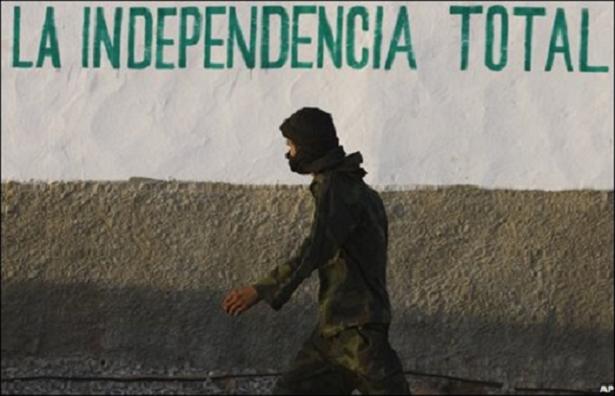
After the Moroccan authorities’ use of force to break up the large and prolonged demonstrations in 2005-2006, the resistance subsequently opted mainly for smaller protests, some of which were planned and some of which were spontaneous. A typical protest would begin on a street corner or a plaza where a Sahrawi flag would be unfurled, women would start ululating, and people would begin chanting pro-independence slogans. Within a few minutes, soldiers and police would arrive, and the crowd would quickly scatter. Other tactics have included leafleting, graffiti (including tagging the homes of collaborators), and cultural celebrations with political overtones. Such nonviolent actions, while broadly supported by the people, appear to have been less a part of coordinated resistance than a result of action by individuals. Still, the Moroccan government’s regular use of violent repression to subdue the Sahrawi-led nonviolent protests suggests that civil resistance is seen as a threat to Moroccan control. There have been some small victories, such as the successful campaign which led to Sahrawi nonviolent resistance leader Aminatou Haidar securing the 2008 Robert F. Kennedy Human Rights Award, as well as forcing Moroccan authorities to reverse their expulsion order in December 2009, which resulted in her near-fatal thirty-day hunger strike.
Furthermore, as inadequate as the Moroccan autonomy proposal may be, it nevertheless constitutes a reversal of Morocco’s historical insistence that Western Sahara is as much a part of Morocco as other provinces, by acknowledging that it is indeed a distinct entity. Protests in Western Sahara in recent years have begun to raise some awareness within Morocco, especially among intellectuals, human rights activists, pro-democracy groups, and some moderate Islamists - long suspicious of the government line in a number of areas - that not all Sahrawis see themselves as Moroccans, that it is not simply an Algerian plot, and that there exists a genuine indigenous opposition to Moroccan rule.
In the occupied territory, Moroccan colonists and collaborators are given preference for housing and employment and the indigenous people receive virtually no benefits from their country’s rich fisheries and phosphate deposits. In September 2010, in a precursor to the “Arab Spring,” Sahrawi activists erected a tent city about fifteen kilometers outside of Laayoune, the former colonial capital and largest city in the occupied territory. Since any protests calling for self-determination, independence, or enforcement of UN Security Council resolutions are brutally suppressed, the demonstrators pointedly avoided such provocative calls, instead simply demanding economic justice. Even this was too much for the Moroccan monarchy, which was determined to crush this nonviolent act of mass defiance. The Moroccans tightened the siege in early October, attacking vehicles bringing food, water, and medical supplies to the camp, resulting in scores of injuries and the death of a fourteen-year old boy. Finally, on 8 November, the Moroccans attacked the camp, driving protesters out with tear gas and hoses, beating those who did not flee fast enough, and killing as many as two dozen people. In response, violent anti-occupation rioting erupted, resulting in the first Moroccan fatalities at the hands of Sahrawis since the 1991 ceasefire. This then triggered the burning and pillaging of Sahrawi homes and shops and the shooting and arresting of suspected activists, some of whom were charged with treason and hauled before military courts.
One of the obstacles to the internal resistance is that Moroccan settlers outnumber the indigenous population by a ratio of more than three to one and by more in the major cities, making certain tactics used effectively in similar struggles more problematic. For example, although a general strike could be effective, the large number of Moroccan settlers, combined with the minority of indigenous Sahrawis who oppose independence, could likely fill the void resulting from the absence of much of the Sahrawi workforce. Although that might be alleviated by growing pro-independence sentiments among ethnic Sahrawi settlers from the southern part of Morocco, it still presents challenges that have not been faced by largely nonviolent struggles in other occupied lands--among them East Timor, Kosovo, and the Palestinian territories.
Earlier this month, the United States, for the first time, included renewing the mandate of MINURSO, a provision giving the UN peacekeepers the authority to monitor the human rights situation in both the Moroccan-occupied Western Sahara and the Polisario-administered refugee camps, in its draft of the biannual UN Security Council resolution. Currently, MINURSO is the only UN peacekeeping operation in the world without a human rights mandate. Under pressure from Morocco, France, and some pro-Moroccan sectors of the Obama administration and Congress, the United States dropped the human rights provisions in the resolution renewing MINURSO.
In response, recent weeks have witnessed some of the largest demonstrations in the history of the occupation, despite ongoing repression by Moroccan occupation forces.
Morocco has been able to persist in flouting its international legal obligations toward Western Sahara largely because France and the United States have continued to arm Moroccan occupation forces and block the enforcement of resolutions in the UN Security Council demanding that Morocco allow for self-determination or even simply allow human rights monitoring in the occupied country. So now, at least as important as nonviolent resistance by Sahrawis, is the potential of nonviolent action by the citizens of France, the United States, and other countries that enable Morocco to maintain its occupation. Such campaigns played a major role in forcing Australia, Great Britain, and the United States to end their support for Indonesia’s occupation of East Timor, finally enabling the former Portuguese colony to become free. The only realistic hope to end the occupation of Western Sahara, resolve the conflict, and save the vitally important post-World War II principles enshrined in the United Nations Charter, which forbid any country from expanding its territory through military force, may be a similar campaign by global civil society.  


Western Sahara: Why Africa’s last colony can’t break free - Ideas - The Boston Globe

y Jenn Abelson 

 |  Globe Staff
  June 16, 2013
Western Sahara, near the Mauritanian border.
Bruno Barbey/Magnum
Western Sahara, near the Mauritanian border.
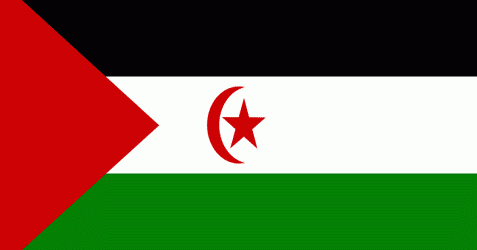
LAAYOUNE, WESTERN SAHARA — On a recent Saturday in May, as dusk shaded into night in this desert city, more than a thousand women, men, and children poured into the streets. They chanted slogans for independence; flashed the peace sign to show their support for the Polisario Front; and waved the illegal red, green, and black flag of a nation that may never exist.
For anyone who isn’t a geography buff, it’s likely that the Polisario Front, and perhaps even Western Sahara, are unfamiliar names. A former Spanish colony now annexed and ruled by neighboring Morocco, this territory has been waiting four decades for a shot at independence it was promised but never received.After a half-century of global decolonization that has produced about 80 new nations throughout the world, Western Sahara is now by far the largest piece of land remaining on the United Nations’ list of “non-self-governing territories,” places it considers to have an unfulfilled right to decide their own futures.
This year marks the 40th anniversary of the push for independence in Western Sahara, a movement that for the last two decades has been largely peaceful. The Polisario Front—the formerly armed nationalist group that officially represents Western Saharans in their negotiations—signed a cease-fire with Morocco in 1991, and since that time protests have unfolded much like this recent one.Members of the indigenous Sahrawi ethnic group raised their fists in the air and honked car horns to show their displeasure with Moroccan rule; some brandished Polisario flags, which are banned by the government 800 miles away in Rabat. The evening ended with some rock-throwing and accusations of injury by both sides. No shots were fired.
In part because their campaign has been a civil one, it has unfolded almost totally outside the world’s sphere of attention. Elsewhere on the continent, civil war has split Sudan into two countries; self-immolation and riots have brought regime change across North Africa. Here, meanwhile, even though the UN, the United States, and most other powerful nations have never recognized Morocco’s sovereignty over the area, the independence movement has been unable to make headway.
Today, the Sahrawis are becoming increasingly frustrated, and politics are making the prospects of independence more distant, if anything. The Moroccan government has shown no sign of loosening its grip. Officials worry about Islamic militants fomenting violence, given Polisario’s backing by rival Algeria; furthermore, Morocco relies on the territory’s fisheries and phosphate mines, and has begun exploring for oil. Its allies in the West, including the United States, prize Morocco as a stable ally in a volatile region, and aren’t moving to force its hand.
The stalemate here in Africa’s last remaining colony, and the willingness to let it simmer as the world focuses on deadlier conflicts in nearby Mali and Syria, raise the uncomfortable question of whether a peaceful breakup of nations is really possible—even when the process, officially speaking, enjoys the full support of the UN. Western Sahara is emerging as a case study on the limits of the international community’s power to help a people win self-determination when they choose not to be violent, but to follow the rules.
Moroccans participating in “The Green March” in 1975, when the king of Morocco called on 300,000 civilians to stake Western Sahara as their own.
Bruno Barbey/Magnum
Moroccans participating in “The Green March” in 1975, when the king of Morocco called on 300,000 civilians to stake Western Sahara as their own.
“It doesn’t make sense. Why are just the Sahrawis left behind? Why are we not being helped by the international community?” Lahbib Salhi, 63, a Sahrawi activist, said in a recent interview in Laayoune. “Most other countries got independence. Look at Namibia, Mozambique...look at Bosnia and Kosovo even South Sudan. But why are the Sahrawis left behind?”
***
Western Sahara is the last chapter of a story that began in the wake of World War II, when the world’s colonial empires started to break apart. In the decades after the war, France spun off about two dozen countries, including Morocco in 1956. The United Kingdom let go of roughly 40 territories. The sweep of decolonization, formalized in the UN’s 1960 “Declaration on the Granting of Independence to Colonial Countries and Peoples,” rapidly redrew the map of the world.
Spain and Portugal were slower to unwind their dominions, but by 1975, in the face of growing international pressure and fierce fighting by the newly formed Polisario, Spain was ready to relinquish what was then called Spanish Sahara.
The colony was a 103,000-square-mile tract of Western Africa with roughly 75,000 Sahrawi inhabitants, people who trace their roots to nomadic tribes.Their right to self-determination was upheld by the International Court of Justice that year. But any chance at a quick, smooth transition to independence was derailed when neighbors Morocco and Mauritania each claimed the area.
That put Western Sahara into a small, unhappy group of territories where decolonization was botched in part because of attempted annexation by a neighboring state, says Jacob Mundy, a professor at Colgate University and the author of a 2010 book, “Western Sahara: War, Nationalism, and Conflict Irresolution.”
The most notable of those, East Timor, suffered near genocidal violence when Indonesian forces took control from Portugal in 1975. After a bloody referendum in 1999, East Timor finally got its independence, but it remains impoverished and corrupt, largely because of this damaging process.
Western Sahara has seen violence, too. The Polisario, organized in 1973, at first waged a guerilla war against Spain. Then, in November 1975, the king of Morocco orchestrated what became known as “The Green March,” calling on 300,000 civilians to descend into Western Sahara to stake it as their own. Spain quickly relented and transferred authority to Morocco and Mauritania. Now the Polisario turned on these countries. As war escalated, Mauritania renounced its right to Western Sahara in 1979, leaving Morocco with sole control, but no recognized claim.
The fighting continued for another decade, and slowly reshaped the makeup of the territory. Sahrawi refugees fled for camps in Algeria, which backed the Polisario movement. Today more than 100,000 live in the camps, governed by the Polisario, which faces its own accusations of suppressing freedom of expression, torture, and embezzling aid. Waves of Moroccans, meanwhile, moved into Western Sahara, lured by strong economic incentives.
The Polisario Front laid down arms in 1991 in a UN-brokered deal that gave Western Saharans the right to vote on their own future, choosing independence or integration into Morocco. The referendum was supposed to be in 1992. But the effort broke down in arguments over the eligibility of tens of thousands of resettled Moroccans who now called the territory home. Subsequent political talks went nowhere, and more than 20 years later, the people of Western Sahara find themselves in suspended animation.
“There is an abiding disappointment in the UN as an institution, one that sometimes borders on cynicism,” said Jeffrey Smith, a professor of international law in Ottawa who served as counsel to the UN mission in East Timor during that country’s transition to independence.
Despite that disappointment, in a region known for militant revolution and guerilla warfare, the Sahrawis’ playbook has come to look more like a Western protest effort. They stage marches and organize human rights activist groups.Aminatou Haidar, a Nobel Peace Prize nominee who was abducted and tortured in a secret prison in the 1980s, went on a hunger strike for 32 days at a Spanish airport in 2009.
Then, in 2010, activists set up a protest camp, Gdeim Izik, in an empty stretch of desert a few miles outside Laayoune. At least 10,000 people pitched tents as a way to demonstrate against occupation and get attention for their demands to end discrimination and the lack of job opportunities. It was illegal (Morocco has strong laws against freedom of assembly without permits), but not violent—familiar to anyone who saw the Occupy camps that swept across the United States a year later. There were workshops, a charity group to collect funds, and a dialogue committee responsible for running negotiations with the Moroccan government.
“The idea came in response to the oppression that’s been going on for decades.We want to come up with something new, something different, and get out of the city limits,” said El Idrissi Mohamed Lamine, 27, who was one of the protesters.
After 28 days, authorities put an end to the civil disobedience and brutally dismantled the camp, burning tents to the ground, beating protesters, and arresting others. Protesters fought back; several people were killed, including security officers, and hundreds were injured.
To activists, Gdeim Izik was a success; it broke through the media blockage and was covered by organizations that usually ignore them. The Sahrawis like to see it as the inspiration for the Arab Spring—Noam Chomsky has argued that the widespread political and economic grievances that resulted in that wave of popular uprisings started in Gdeim Izik.
***
Either way, it has not made much of a difference in Western Sahara itself.That’s in part due to two circumstances: the presence of natural resources and the region’s occupation by a nation that is a strong Western ally. The 714-mile-long coastline gives Morocco access to some of the world’s richest fisheries, while phosphate reserves are becoming only more valuable as the global demand for fertilizer grows.
Politically, Western Sahara is a unifying issue within Morocco; analysts worry that splitting it off could undermine the monarchy, and threaten a pillar of stability in a volatile region. Polisario’s socialist rhetoric and Algerian ties have not won them friends in the West, either. For the West, “the status quo is much more tolerable than the frightening futures that might result from prioritizing a solution over stability,” Mundy said.
Morocco’s own position on Western Sahara stresses this risk. It has proposed an autonomy plan that would give the Sahrawis limited self-government but not independence. Officials in Rabat insist this is for the best: An independent but weak new state, they say, would be vulnerable to extremists and jihadis.
“An independent state is not viable in Sahara. You have to be very clear for security reasons. Today what is happening in Mali is happening in the Sahara. It is threatening the security of the Sahara and everywhere,” said Youssef Armani, minister delegate of foreign affairs and cooperation of the Kingdom of Morocco, in a meeting with journalists in May. “There is no room for a failed state in the region.”
Independence-seekers respond that Morocco is inflating security threats and making false allegations about Al Qaeda infiltrating the refugee camps.
“It is propaganda,” said El Ghalia Djimi, vice president of the Sahrawi Association of Victims of Grave Human Rights Violations, who says the independence movement doesn’t have terrorist connections.
A spontaneous protest in favor of independence in Laayoune, Western Sahara.
Jenn Abelson/Globe Staff
A spontaneous protest in favor of independence in Laayoune, Western Sahara.
“We are a small people with big land and big natural resources and occupied by a power that has historical relationships with Western countries,” she said. “So this is why they let this ongoing conflict not get resolved.”
***
How do successful national breakups happen? In the time Western Sahara has waited for its chance at independence, dozens of new countries have been born.Many were smooth spinoffs of islands by distant colonizers.
But others, especially with contiguous territories and at least one unwilling party, were painful and bloody. Yugoslavia dissolved into separate populations, propelled by ethnic cleansing. Kosovo is still under UN protection, its declaration of independence from Serbia still unrecognized by Serbia itself.Most recently, South Sudan’s 2011 independence came only after decades of brutal civil war and pressure from Christian groups in the United States who had worked for decades on the issue. In nearly all of these conflicts, including East Timor, independence was finally achieved once these self-determination struggles had won substantive support from the United States, the United Kingdom, or other Western allies.
America has tried to keep a neutral position on Western Sahara: It does not recognize Moroccan sovereignty and helps fund the UN mission there, but hasn’t aided the independence movement. It considers Morocco’s autonomy proposal to be “serious, realistic, and credible,” according to a recent Congressional Research Service report by Alexis Arieff, an analyst in African affairs.
In April, for the first time, the United States drafted a proposal for the UN to monitor human rights in Western Sahara—an effort defeated after heavy lobbying from Morocco, which set off the protests here last month.
America’s premium on stability essentially boils down to support for Morocco—for now. President Obama, in a call to King Mohammed VI in May, discussed the “importance of continuing to deepen our bilateral cooperation, especially on regional security matters of mutual concern.”
In Western Sahara, activists still say they want to break up the “right” way.Even after a recent attack on Aminatou Haidar left her black Toyota Corolla smashed by rocks, the woman nicknamed “the Sahrawi Gandhi” says she is committed to peace as the path to independence.
But she added that there is growing frustration among younger Sahrawis, who have not seen progress in this protracted, seemingly forgotten struggle. Haidar acknowledged that they could be at risk of being radicalized on the issue, and of returning to a violent struggle.
She and other Sahrawis blame the international community for not pressing forward on what they see as a long-promised vote. Last week, the UN’s Special Committee on Decolonization began its periodic discussions on the case of Western Sahara and other territories. On Tuesday in New York, Polisario Front Secretary-General Mohamed Abdelaziz expressed frustration at the impasse and pressed UN Secretary-General Ban Ki-moon to give more attention to the dispute.
Despite his plea, it is hard to see the door opening anytime soon. Charles Dunbar, a Boston University lecturer who spent fom 1997 to 1999 living in Laayoune as a UN diplomat and trying to move the referendum forward, said that if a vote had been held back then, the Sahrawis would have won their independence. He blames the long deadlock on UN inaction.
“The true blame lies with the UN Security Council. It is the unwillingness of the council to take decisive action that has caused this mission to be seemingly, permanently stalemated,” Dunbar said.
About the prospects for the Sahrawis to gain their own country today, he considers himself a pessimist. “The world,” he said, “just has other priorities.”
Jenn Abelson is an investigative reporter with the Globe’s Spotlight team. She traveled to Western Sahara and Morocco with the support of the International Women’s Media Foundation. E-mail abelson@globe.com .  

Apr 22, 2013

Western Sahara: Country Reports on Human Rights Practices for 2012


EXECUTIVE SUMMARYShare    

Morocco claims the Western Sahara territory and administers Moroccan law through Moroccan institutions in the estimated 85 percent of the territory it controls. The Popular Front for the Liberation of Saguia el Hamra and Rio de Oro (Polisario), an organization that has sought independence for the former Spanish territory since 1973, disputes Morocco’s claim to sovereignty over the territory.
There has been no census since the Spanish left the territory, but the population was estimated to be more than 500,000, many of whom were attributable to Moroccan in-migration. The indigenous population is Sahrawi, (literally “people of the desert” in Arabic) who also live in southern Morocco, Algeria, and Mauritania.
The Moroccan government sent troops and civilians into the northern two provinces after Spain withdrew in 1975 and extended its administration to the third province after Mauritania renounced its claim in 1979. Moroccan and Polisario forces fought intermittently from 1975 until a 1991 ceasefire and the establishment of a UN peacekeeping contingent, the UN Mission for a Referendum in Western Sahara, whose mandate does not include human rights monitoring. In the late 1980s, Morocco constructed an approximately 1,690-mile stone and sand wall known as the “berm” that effectively marks the limit of its administrative control.
In 1988 Morocco and the Polisario agreed to settle the sovereignty dispute by referendum. The parties did not resolve disagreements over voter eligibility and which options for self-determination (integration, independence, or something in between) should be on the ballot; consequently, a referendum has not taken place. Since 2007 there have been various attempts to broker a solution in face-to-face negotiations between representatives of the two sides under UN auspices, most recently facilitated by the UN secretary-general’s personal envoy for the Western Sahara, Christopher Ross. Morocco has proposed autonomy for the territory within the kingdom; the Polisario has proposed a referendum in which full independence would be an option. During a ninth round of informal talks held March 11-13 in Manhassett, New York, each side maintained its position, as in previous rounds, unwilling to enter into negotiation.
Morocco considers the part of the territory that it administers to be an integral component of the kingdom with the same laws and structures conditioning the exercise of civil liberties and political and economic rights. Security forces reported to civilian authorities. Under the constitution ultimate authority rests with King Mohammed VI who presides over the Council of Ministers and approves members of the government recommended to him by the prime minister. In July 2011 Moroccans adopted a new constitution that was applied to the Western Sahara. (For additional information on developments in Morocco, see the 2012 Morocco Human Rights Report.) Nine parliamentarians were elected in November 2011 to represent the Western Sahara in the upper and lower houses of the Moroccan parliament.
The most important human rights problems specific to Western Sahara were Moroccan government restriction on proindependence views and associations; otherwise, overall human rights conditions in the territory converged with those in the kingdom. Several long-standing human rights problems related to proindependence activity, including limitations on the freedom of speech, press, assembly, and association, the use of arbitrary and prolonged detention to quell dissent, and physical and verbal abuse of detainees during arrests and imprisonment. Authorities also continued to deny formal registration to proindependence associations. As a result these associations were not able to establish offices, recruit members, collect donations, or visit imprisoned Saharan proindependence activists or Polisario separatists.
Widespread impunity existed, absent prosecutions of human rights abuses. Sahrawi human rights organizations claimed that the majority of police and other officials accused of torture remained in positions of authority. Widespread corruption continued among security forces and the judiciary.

Section 1. Respect for the Integrity of the Person, Including Freedom from:Share    

a. Arbitrary or Unlawful Deprivation of Life

In contrast to the prior year, there were no reports that security officials committed unlawful killings, although the 2010 police killing of Said Dambar in Laayoune continued to reverberate in the Sahrawi community. In spite of repeated requests by Dambar’s family that his body undergo an autopsy, authorities on June 6 buried the body, providing the family with just 30 minutes advance notice. Local human rights nongovernmental organizations (NGOs) alleged that during the years of Moroccan occupation between 53 and 71 Sahrawis were killed in detention from torture and that no investigations into these cases were ever opened.

b. Disappearance

There were no confirmed reports of politically motivated disappearances during the year; however, according to unconfirmed reports by local human rights organizations, Soua’dou El Garhi have allegedly disappeared in 2008 and Mohamed Lamin Boutaba’a in 2011.
The governmental National Council for Human Rights (CNDH) provided reparations, including monetary assistance, vocational training, and medical insurance to Sahrawis or family members of those who had disappeared or been detained during the 1970s and 1980s. During the year the Laayoune branch of CNDH recommended compensation of 141 taxi licenses, 108 homes or housing stipends, and 81 civil service jobs in the Ministries of Justice and the Interior to victims (or victims’ families) of forced disappearance. The CNDH continued to receive and investigate reparation claims throughout the year, although it shifted focus from individual reparations to community projects; however, none of CNDH-funded projects were located in the Western Sahara.
While the CNDH’s role is to investigate claims and forward and endorse recommendations on reparation settlements to the local government and relevant ministries, the actual delivery of reparations depends on government action. Of the 552 claims accepted during the year, the CNDH recommended reparations for 463. At year’s end 144 cases remained unresolved. Sahrawi human rights groups and families continued to claim that the CNDH had not accepted 114 cases for review; and that many more claimants had not actually received reparations.

c. Torture and Other Cruel, Inhuman, or Degrading Treatment or Punishment

Credible reports indicated that security forces engaged in torture, beatings, and other mistreatment of detainees. Both international and local NGOs continued to report abuses, especially of Sahrawi independence advocates. Torture typically occurred in pretrial detention, as exemplified in the September 17 joint submission of 10 Western Saharan human rights groups to Juan Mendez, the UN special rapporteur on torture. The document named 10 men still in detention arrested during the 2010 conflict at Gdeim Izik campsite who claimed to have been raped during their detention. Their families had filed accusations with the military court in Rabat, but there was no action on the claims by year’s end. Other types of abuse claimed to have been employed by security forces were: beating with electric cables, near suffocation with wet cloths soaked in urine or chemicals, cigarette burns, and hanging by the arms or as a “trussed chicken” for prolonged periods (see section 1.d.). According to local Sahrawi NGOs, since 2011 the courts no longer provided claimants of alleged police abuse with registration numbers to track the disposition of their claims.
Most incidents of degrading treatment occurred during proindependence demonstrations or protests calling for the release of Sahrawi political prisoners. On November 1, after she met with personal envoy of the UN secretary-general for Western Sahara, Christopher Ross, at the UN mission in Laayoune, police attacked Aminatou Haidar, the head of the Sahrawi Collective of Human Rights Defenders (CODESA), and vandalized her car during a nonviolent protest. A video on YouTube shows Haidar shoved to the ground and threatened. At year’s end there were neither charges against those responsible, nor an investigation of the attack. The Robert F. Kennedy Center for Justice and Human Rights and other human rights organizations condemned the attack. Other corroborated reports indicated that plainclothes police forcibly dispersed small protests several times a week.

Prison and Detention Center Conditions

NGOs continued to allege abuse and a persistence of substandard prison conditions. According to the Moroccan Observatory of Prisons (OMP), an umbrella advocacy group of lawyers and activists promoting better conditions for prisoners, family members of inmates regularly complained of physical abuse and occasional torture of inmates in Laayoune Prison, the sole prison in Western Sahara. However, verification of these claims was impossible as the authorities prohibited human rights advocates and NGOs access to the prison since 2008. The most common allegations were physical abuse and a lack of access to health care. It was widely known that some prisoners and detainees were transferred to Sale, Marrakech, and other locations in internationally recognized Morocco, far from their families and lawyers. An October 30 CHDH report, which included Western Sahara, called for the Moroccan government to take steps to prevent torture in prisons.
Human rights and proindependence activists claimed authorities falsely charged them with criminal offenses. Laws require authorities to investigate abuse allegations for any individual facing prosecution who requests an investigation, but local and international human rights advocates claimed that courts often refused to order medical examinations or to consider medical examination results in cases of alleged torture. Most complaints were not investigated. Moreover, according to local NGOs, medical personnel failed to document any traces of injuries from torture, and ambulances were often not dispatched to treat the injured at demonstrations.
The 23 Sahrawis arrested during the 2010 dismantling of the Gdeim Izik camp and subsequent violence in Laayoune remained in custody during the year at Sale Number Two Prison near Rabat. One additional arrest was made on September 9 in Dakhla, and this detainee was added to the original 23 (see section 1.d.). On December 17, the prisoners were transferred from Sale Number Two to Sale Number One Prison. Their trial before a military tribunal was postponed twice and was rescheduled to begin on February 1, 2013. Families of the detainees charged that prison conditions were unusually harsh, with limited family visitation rights and little access to health care, proper food, and clean clothes.
Throughout the year there were continuing credible reports from Sahrawi activists who were detained and subsequently released--as well as many of the families of those still in custody--that security officials beat and otherwise abused them. However, according to several Sahrawi contacts police tended to use force against protesters in the streets without actually arresting them. Domestic NGOs alleged that in numerous instances security officials threatened detainees with rape. After his visit to Morocco and the Western Sahara, UN Special Rapporteur Mendez stated that he had good reason to believe there were credible allegations of sexual assault, threats of rape of the victim or family members, and other forms of ill-treatment.
NGOs providing social, educational, or religious services were permitted to enter detention facilities and visit with prisoners. NGOs with a human rights focus were not permitted to enter, except with special authorization. International delegations were occasionally allowed to visit but were usually restricted to common areas within the detention center with no access to prisoners in their cells. The OMP relayed complaints of substandard prison conditions to authorities, but authorities did not permit them to visit or investigate these complaints.
The government reported 34 total visits to the prison in Laayoune. The visits included one by a UN special rapporteur, 20 by judicial officials, five by governmental regional monitoring commissions, and eight by “national” NGOs. (The CNDH received complaints and made seven visits to Laayoune Prison, which the government likely counted as a “NGO visit” although the CNDH is a governmental organization.)

d. Arbitrary Arrest or Detention

The law prohibits arbitrary arrest and detention, but security forces routinely ignored this in practice.
At year’s end the 24 Sahrawis arrested during the dismantling of the Gdeim Izik camp in 2010 and subsequent violence in Laayoune remained in custody awaiting a trial date in February 2013 at Sale Prison near Rabat (see section 1.c.). By year’s end the government had issued no clear charges other than police allegations that they were connected to the deaths of 11 security service personnel during the riots.

Role of the Police and Security Apparatus

Police impunity remained a problem. The government reported no complaints registered against police or judicial police. However, during the year alleged victims of human rights abuses filed more complaints against police agents and Auxiliary Forces than in the previous year, according to several international, domestic, and Sahrawi NGOs. The government disputed the alleged increase and provided statistics indicating that through November, residents of Western Sahara had filed 113 complaints against authorities based throughout the territory. Judicial police and the prosecutor investigated the 113 complaints while dismissing 69 others on the grounds of lack of evidence. International and domestic human rights organizations claimed that authorities dismissed nearly all complaints and relied only on police version of events.
The government stated that it increased security personnel training in human rights and regularly coordinated with the CNDH to draw on the expertise of its members. On several occasions throughout the year, CNDH coordinated with international NGOs to hold conferences and training sessions on human rights protections mechanisms in the Western Sahara. Human rights components are included in basic training as well as in various educational milestones throughout the careers of most security personnel. According to the government, some prosecutions involved officers who allegedly committed crimes in the territory; however, the number was unavailable because data was not disaggregated by region. Human rights organizations continued to track the practice of allowing alleged abusers to remain in leadership positions or to be transferred to other positions. According to the unrecognized NGO Association of Sahrawi Victims of Grave Human Rights Violations (ASVDH) in their September 17 presentation to the UN special rapporteur on torture, 54 prison guards and officials had committed abuse amounting to torture (see section 1.c.).
While there was no large-scale societal violence as in the previous year in Dakhla, there was at least one case of societal violence in which Sahrawi travelers were attacked as they entered Morocco. Although Sahrawi activists alleged that security forces responded slowly and failed to protect the victims, the government maintained that authorities responded appropriately to prevent an escalation of violence between the Sahrawis and Moroccans.

Arrest Procedures and Treatment While in Detention

Police may arrest an individual after a general prosecutor issues an oral or written warrant; in practice warrants occasionally were issued after the arrest. Authorities denied defendants’ access to counsel or family members during the initial 96 hours of detention under terrorism-related laws or 48 hours of detention for other charges, during which police interrogated detainees and alleged abuse or torture was most likely to occur. In many cases, including those not related to terrorism, detainees were held incommunicado for several days and granted limited or no access to legal representation. Under the antiterrorism law, after the first 96 hours, two additional 96-hour extensions are allowed with the written approval of the prosecutor. By law a person may be detained without trial for as long as one year while an investigating magistrate completes work.
Arbitrary Arrest: NGOs claimed several cases of arbitrary arrest and detention occurred for periods up to 20 days, although arrests occurred less frequently than in previous years. According to several interlocutors in Laayoune, the decreased number of arrests at protest rallies was due to security forces’ opting for aggressive dispersal, rather than detention of participants in a gathering. This approach, according to NGO contacts, was used to instill fear without creating the paper record of an arrest. The 24 Sahrawis arrested during the 2010 dismantling of the Gdeim Izik camp and subsequent violence in Laayoune remained in custody during the year at Sale Prison near Rabat; a new trial date was set for February 1, 2013.
Pretrial Detention: Pretrial detention was a problem throughout Morocco and Western Sahara, as evidenced by the 24 detainees in Sale Prison since 2010. Disaggregated information was not available.

Political Prisoners and Detainees

The government denied that there were political prisoners or detainees and claimed all those incarcerated had been convicted of or charged with crimes. However, human rights and proindependence groups alleged that there were up to 74 Saharawis held across Western Sahara and internationally recognized Morocco whom they considered political prisoners.

Section 2. Respect for Civil Liberties, Including:Share    

a. Freedom of Speech and Press

Moroccan law prohibits citizens from criticizing Islam or the institution of the monarchy or to oppose the government’s official position regarding territorial integrity and Western Sahara. Saharan media outlets and bloggers practiced self-censorship on these issues, and there were no reports of government action against them for what they had written.
The government enforced strict procedures governing the ability of NGOs and activists to meet with journalists. Foreign journalists needed and did not always receive prior official approval from the Ministry of Communication before meeting with leftist political activists. The Ministry of Communications accredited five American and one British journalists travelling on December 3 to 7 to Laayoune on a private visit. They were able to speak with proindependence activists, as well as local officials. However, according to a November 8 statement of the Interior Ministry, authorities expelled 15 Spanish and four Norwegian activist bloggers from the Western Sahara for entering without permission. According to the government, they travelled to Laayoune pretending to be tourists, but planned to meet proindependence activists at the time of the second anniversary of the clashes surrounding the dismantling of the Gdeim Izik campsite.

Internet Freedom

Moroccan and international media, including Polisario-controlled television and radio from the refugee camps in Algeria, as well as satellite television, were available in the territory. There was no indication that Internet access in the territory differed from that in internationally recognized Morocco, which was generally open. However, human rights and Sahrawi bloggers affiliated with leftist political groups assumed that authorities closely monitored their activities and felt the need to hide their identities.

b. Freedom of Peaceful Assembly and Association

The Ministry of the Interior required those wishing to hold public gatherings, including demonstrations, to obtain permission for public assemblies and rarely granted permission for politically oriented events apart from those related to the election. The government generally used administrative delays and other methods to suppress or discourage demonstrations with political overtones and prohibited or failed to accept requests from groups in the territory associated with human rights activism or proindependence opinions. Authorities generally tolerated unauthorized sit-ins, demonstrations, and peaceful protests by groups such as the association of unemployed graduates that focused on economic grievances and did not bear on human rights or encourage a proindependence stance.
Several residents of Laayoune claimed that police tended to disperse large gatherings of all kinds, even dispersing reunions held to celebrate the return of family members from the Polisario camps at Tindouf. Following his visit to the region, UN Special Rapporteur Mendez stated that treatment “amounting to torture” appears in Morocco and the Western Sahara during “large demonstrations.” Reports also suggested that abuse may have occurred against smaller demonstrations as well. According to local NGOs, on October 1, seven were injured when police dispersed a sit-in by unemployed Sahrawi university graduates in the city of Essmara. Proindependence organizations and some human rights NGOs stated that in recent years they have applied less frequently for legal permits to engage in sit-ins and demonstrations because police rarely granted the permits. The government reported that by the end of the year, more than 700 demonstrations or protests had been held in Western Sahara. The majority of these related to socioeconomic issues such as unemployment and housing concerns, but a few also had political overtones, such as sit-ins by relatives of disappeared persons and alleged political prisoners.
Authorities violently dispersed protests throughout the year, resulting in dozens of injuries to heads and limbs that required medical attention. For example, on November 1, security forces using excessive force suppressed proindependence demonstrations in Laayoune, Dakhla, and Smara. On November 3, several protesters were arrested in follow-up demonstrations Dakhla. Victims of such abuse claimed that government authorities were slow to respond to the formal complaints they filed and contended that since 2011 they were unable to track the status of their complaints.

Freedom of Association

As in previous years, the government did not allow CODESA or the ASVDH to register as NGOs, limiting their ability to raise funds domestically and internationally and to facilitate public meetings. The CNDH invited the ASVDH to join its executive council, which consists in part of members of civil society. The latter refused on grounds that it would continue to seek formal recognition as a registered NGO before it would consider joining the council.

c. Freedom of Religion

See the Department of State’s International Religious Freedom Report at www.state.gov/j/drl/irf/rpt.

d. Freedom of Movement

Unlike in the previous year, there were no reports that the government restricted freedom to travel abroad. There were no reports of the government revoking citizenship. The government cooperated with the Office of the United Nations High Commissioner for Refugees (UNHCR) in implementing the UN’s Confidence Building Measures program which facilitated communication and family exchange visits between Sahrawis in Western Sahara and Sahrawi refugees in Algeria.

Section 3. Respect for Political Rights: The Right of Citizens to Change Their GovernmentShare    

Moroccan citizens in the Western Sahara participated in local municipal and Moroccan parliamentary elections. Nine elected parliamentarians represent the Western Sahara in the House of Counselors (the upper chamber of the parliament). Most elected officials self-identify as Sahrawi and are native to Western Sahara.

Section 4. Corruption and Lack of Transparency in GovernmentShare    

Widespread corruption among security forces and judicial officials was a problem, as was lack of government transparency. Substantial development spending and military officers’ involvement in private business heightened both problems, particularly in the military as officers relied on government connections to gain preferential access to fishing licenses or lucrative contracts for sand and other quarries on state lands, for example. According to government officials, corruption problems, as with incidents of police brutality, were isolated and not endemic.

Section 5. Governmental Attitude Regarding International and Nongovernmental Investigation of Alleged Violations of Human RightsShare    

A small number of international human rights groups generally operated without government restriction, investigating and publishing their findings on human rights cases. Government officials generally were responsive to requests for meetings. The domestic NGOs investigating human rights cases were usually those not recognized by the government. Nevertheless, CNDH offices in Dakhla and Laayoune and other government officials maintained contact with and occasionally investigated some cases which these NGOs raised, especially those that drew international Internet or media attention.

Section 6. Discrimination, Societal Abuses, and Trafficking in PersonsShare    

Information available on discrimination and other societal abuses in the territory is contained in the Human Rights Report on Morocco; the living conditions and social mores paralleled the situation in internationally recognized Morocco, and the laws are the same.
Also see the Department of State’s Trafficking in Persons Report at www.state.gov/j/tip.

Section 7. Worker RightsShare    

The Moroccan labor code applies in the Moroccan-controlled areas of the territory. Moroccan unions covering all sectors were present in those areas but were not active. The largest trade confederations maintained a nominal presence in Laayoune and Dakhla. These included the Moroccan Union of Labor, the Democratic Confederation of Labor, and the National Union of Moroccan Workers.
Strikes are legal, but there were no known labor strikes, other job actions, or collective bargaining agreements during the year. Most union members were employees of the Moroccan government or state-owned organizations. Unions were also active in the phosphate and fishing industries. Wage-sector workers in the territory earned up to 85 percent more than their counterparts in internationally recognized Morocco as an inducement to relocate. The government exempted workers from income and value-added taxes and provided fuel subsidies.
The labor code prohibited forced or bonded labor, and there were no reports that such practices occurred. Penalties for those who perpetrate forced labor range up to four years’ imprisonment, and penalties for forced child labor are between one and three years in prison. Labor inspectors assigned to labor delegation offices in Laayoune and in Oued Eddahab enforced Moroccan labor laws.
Regulations on the minimum age of employment were the same as in Morocco. There were no reports regarding child labor in the formal wage sector. Children worked in family-owned businesses and in the agricultural sector.
The minimum wage and maximum hours of work and occupational health and safety standards were the same as in Morocco. In practice during peak periods, workers in fish processing plants worked as many as 12 hours per day, six days per week. Enforcement was rudimentary, except for prohibition on the employment of women in dangerous occupations.